How to Choose the Right Quilt Pattern for Your Fabric
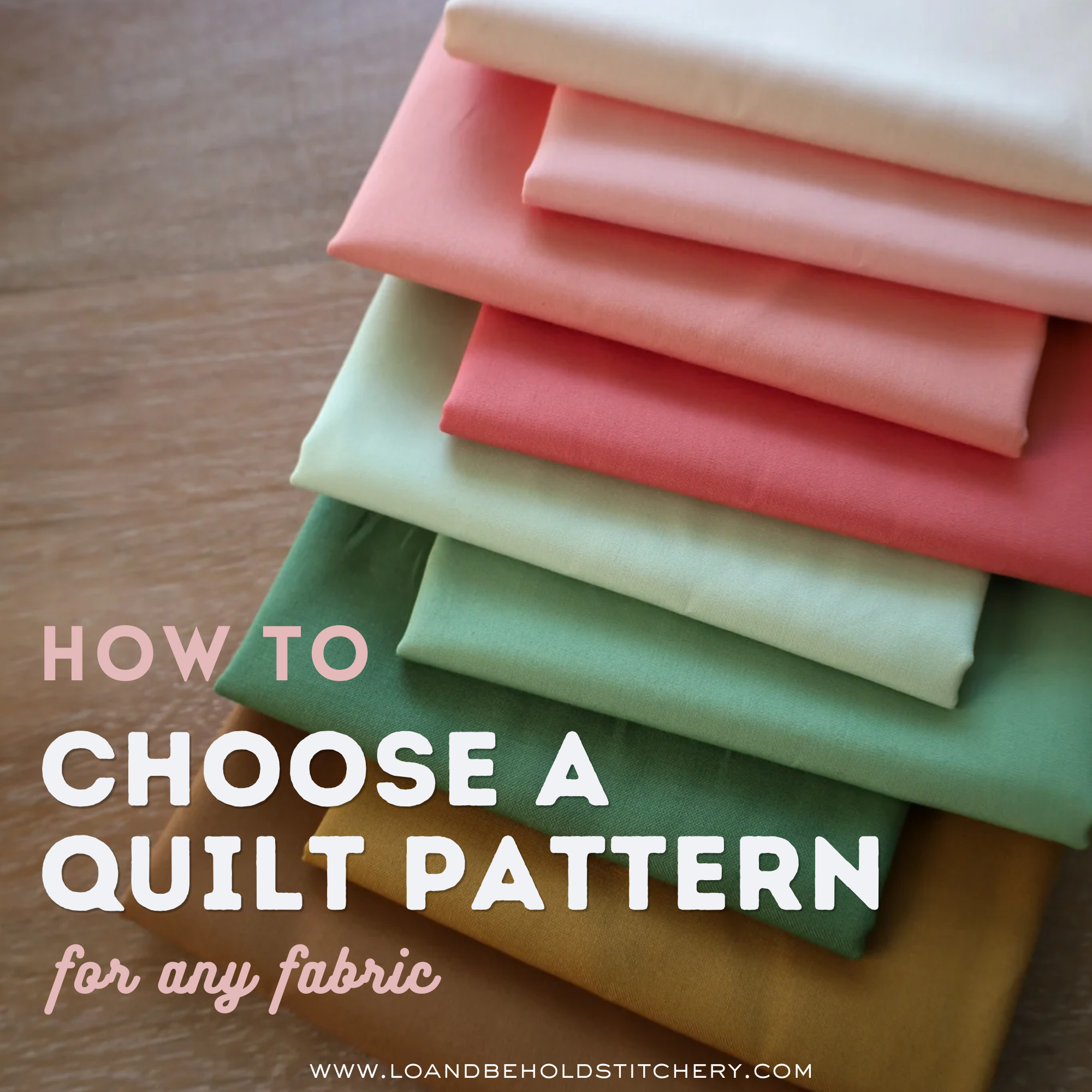
This blog post is actually inspired by a question we received in our Quilty Questions form. I usually answer those in our weekly newsletter, but this time…I found I had a lot to say on the topic!
Q: I just got some beautiful fabric, and I am itching to make a quilt with it! But I don't know how to choose a pattern that will work well with the fabric. Any advice on choosing quilt patterns based on fabric? (There's a lot of advice for the other way around.)
A: Great question! We talk a lot about choosing fabric for a specific pattern, like our guides to choosing colors for Petite Plaid or choosing colors for Upscale Plaid. But choosing a pattern for fabric you already love? That's a conversation we haven't gotten to yet, and so many of us buy fabric with zero pattern in mind, so it's about time.
I have so many thoughts on this one that a typical newsletter blurb wasn't going to cut it. Grab a drink, find a comfy chair, and let's talk about how I'd find the perfect quilt pattern for any fabric.
TABLE OF CONTENTS
- Step 1: Inventory your fabric.
- Step 2: Think about aesthetics.
- Step 3: Plan project goals.
- Step 4: Pick your pattern!
- Some pattern recommendations
- You may also like…
- Frequently asked questions
Step 1: Inventory your fabric.
To start, it helps to take a look at the fabric you want to use and figure out exactly what you have…how much, what kinds of cuts, and what it’s made of.

FABRIC AMOUNT
How much fabric you have will be a big factor in the quilt pattern you choose! If you have a specific fabric in mind for your background, for example, and you can’t buy more, then you’ll only want to look at quilt patterns (and sizes) that take that amount or less.
The same goes for if you have eight fat quarters and you don’t want to buy any more. That will immediately narrow down the number of patterns you can use.
YARDAGE OR PRE-CUTS
Speaking of fat quarters…if you’re working with pre-cuts (whether it’s fat quarters, 10” squares, or anything else), that’s definitely something to think about as you look at patterns! While we quilters do love our pre-cuts, not every pattern is pre-cut friendly.

The flip side is, if you have cut yardage, you may not be able to use a pattern designed for pre-cuts. A 1/4-yard cut can’t always be used in place of a fat quarter. Look for fabric requirements that fit the cuts you have.
FABRIC COMPOSITION
Before you get any further, you should also think about what types of fabric you’ve got. Quilting cotton is versatile enough that you can use it for just about any quilt pattern, but if the fabric you’re eying is a linen, a cotton/linen blend, or even yarn-dyed wovens, you may want to factor that into your decision making!
The looser weaves on those types of fabric make them more likely to fray and stretch (especially if the quilt pattern includes any bias edges), so in that case it’s often best to stick to slightly simpler patterns with larger pieces. Quilts with lots of smaller pieces can also be tricky with looser-weave fabrics, so keep that in mind as well.

That being said, with enough patience and care, you absolutely can make something more complex with smaller pieces using yarn-dyed wovens or looser weave fabrics. But if you’ve got precious fabric, it’s usually best to choose a quilt pattern that works with it instead of making your life harder with tricky piecing.
Step 2: Think about aesthetics.
Once you’ve got a handle on the amount and type of fabric you have, it’s time to make some design choices and figure out the aesthetic you’re going for.
FABRIC DESIGN
First things first: Are you working with prints or solids?

Solids are easy. You don’t need to worry about how they look cut up or if the prints will face the right direction. If you’re working with solids, the world is your quilty oyster!
Prints can get a little trickier. For starters, prints bring an immediate aesthetic choice to your quilt that you need to consider. Imagine, for instance, you’ve got some fun, kind of gothic Halloween fabric you want to use. With that kind of theming, you probably won’t want an ultra-summery quilt pattern (like Summer Pop or Metamorphosis). Again, it’s not that you can’t do that kind of thing…it’s just that Halloween and summer aren’t an obvious fit.
Plus, when prints are involved, you’ve got to consider other things like…
PRINT SCALE AND PIECE SIZES
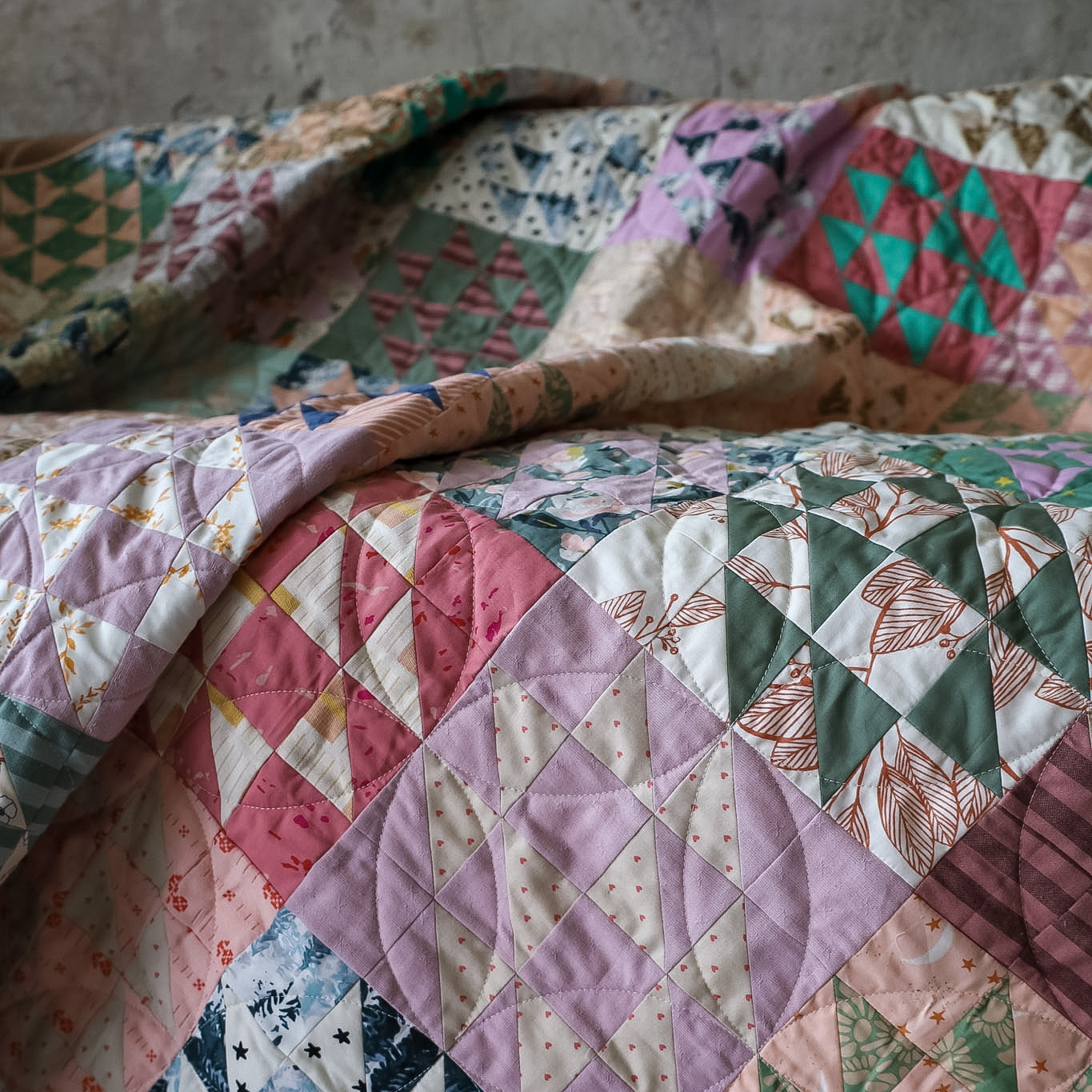
While you can cut up solids with abandon, you may not want to chop up your precious large-scale prints into tiny pieces. This isn’t as much of an issue with small prints, but for bigger prints, you’ll probably want to stick to quilt patterns that use larger cuts (like Nightingale, seen below) so that you can show off larger sections of your prints.

On the flip side, for this Driftwood Knitted Blooms, I went "against the grain" so to speak and used prints for the foreground of this quilt, even though I knew they would eventually be cut up into smaller pieces. And I think it made for an interesting quilt in the end, right? Piece size is something you'll want to think about depending on the scale of your prints, so be sure to consider that when you're looking for the right quilt pattern.


These fabrics went onto to become my Duval Upscale Plaid quilt, which was a little unexpected, but also proof that you can think outside the box when it comes to prints. For this quilt, I used a small geometric print for the background and a mix of solids and prints for the foreground.

DIRECTION
Depending on your print, you may also need to think about the orientation of the fabric in the finished quilt top too. In some patterns (like Patchwork Squares), directional prints are no big deal. But once you start working with units like flying geese, you have to pay a lot more attention to how you orient your fabric. If you don’t want to worry about which direction your fabric faces, stick to simpler quilt patterns with fewer pieced units.
CONTRAST AND VALUE
One more thing to think about with your fabric: What kind of values and contrast you have.
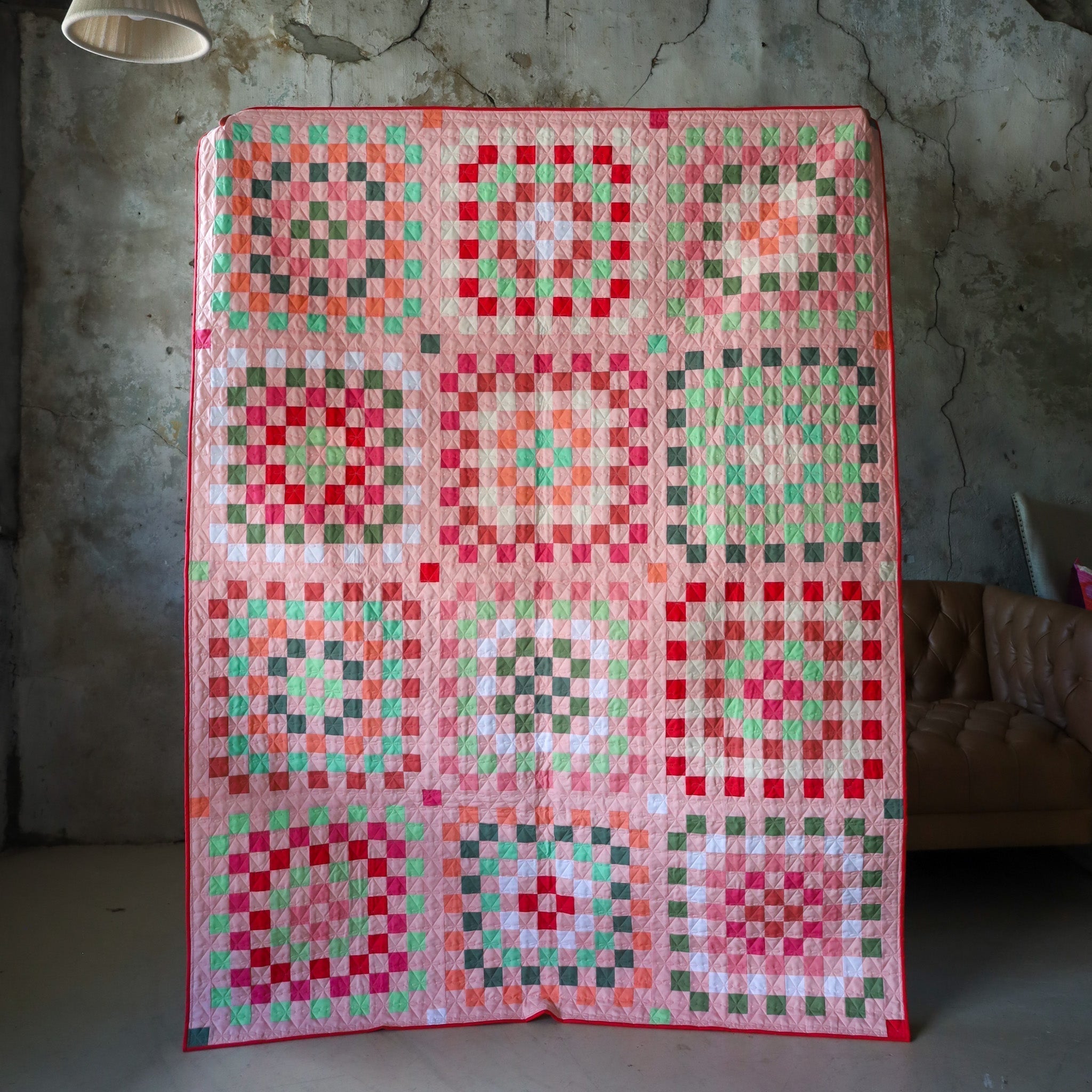
Some quilt patterns really need a lot of contrast between your fabrics. Take Granny Patch. Without contrast between the different colors (especially the background and foreground), you don’t get that defined "granny square" look.

Similarly, you can make Upscale Plaid with all kinds of different colors…but if you want to get the plaid effect, think about contrast and intersection between your different color groups so that you can achieve the plaid effect.

BACKGROUND SPACE
If there is enough background space in a quilt and foreground fabrics are mostly surrounded by background fabrics, I have the philosophy that "anything goes." Something like Vintage Lace or Christmas Joy, can work with all kinds of colors, contrasts, and values, which makes them more versatile for more fabrics.
Step 3: Plan your project goals.
By this point, you’ve hopefully narrowed down potential patterns quite a bit. There are still a few more things you may want to consider as you find the perfect pattern…
QUILT SIZE
This one may seem obvious, but if you’re dreaming of sleeping under that gorgeous fabric every night, you’ll want to look for patterns that include bed sizes. Yes, it is possible to resize a quilt pattern, but it is much easier if you pick a pattern that already comes in the size you want.

SKILL LEVEL
Consider your skill level and comfort level when choosing a pattern as well. Each of our patterns have a skill level tied to them so that you can confidently choose which pattern you'd like to tackle. Don't shy away from a challenge, though! I love supporting quilters, and Lo & Behold Stitchery quilt courses are perfect for growing skills with plenty of support. If you’re looking for ways to narrow down pattern choices, though, it’s totally fair to want to stay within your skill level.

TIMELINE
Some quilts are faster than others. Maybe you’re ready to dive into a big project…or maybe you’d rather use a fast quilt pattern for a quick finish. There’s no wrong answer, but your decision can help eliminate a lot of options!
👍 |
Trusted pattern companies
|
Step 4: Pick the pattern!
With any luck, considering all these factors will make your decision quite a bit easier…and you’ll be ready to pick your pattern!
For example, let’s say I’m looking for the right Lo & Behold Stitchery quilt pattern to use with a Watercolor Wovens fat quarter bundle. That gives me 20 fat quarters to work with, so I know I want something that’s fat quarter friendly. And since I’m working with yarn-dyed wovens, I’ll probably avoid any super intricate piecing with tiny cuts.
Since I’m not using prints, I don’t have to worry about orientation or anything, and since the bundle has a nice range of hues and values, it could work with quite a few patterns.
In this case, I’d really like to make a bed size quilt and use as many of my fat quarters as possible.
That leaves me with two patterns: Christmas Joy or Metamorphosis. I haven’t played with curves in a while, so Metamorphosis it is!

See? With just a handful of decisions, you can eliminate options and find the perfect quilt pattern for your fabric. :)
Some pattern recommendations
If you’re ready to narrow down your quilt pattern choices, these lists might help:
FAT QUARTER FRIENDLY QUILT PATTERNS
- Pansy Patch
- Celtic Crossing 2.0
- Christmas Joy
- Church Window
- Granny Patch
- Heirloom Hearts
- Knitted Blooms
- Knitted Star
- Metamorphosis
- Model Farm
- Mosaic Star
- Mountain Horizon 2.0
-
Nightingale
- Retro Blossoms
- Rhythm
- Retro Ornaments
-
Ruby Sue
-
Summer Pop
-
Vintage Lace
GOOD FOR SHOWING OFF PRINTS
- Celtic Crossing 2.0
- Church Window
- Heirloom Hearts
- Metamorphosis
- Nightingale
- Retro Ornaments
-
Summer Pop
QUILT PATTERNS WITH LOTS OF SIZES
Happy quilting!
You may also like…
- How to Prepare Fabrics for Quilting - Prewashing, Starching, & More
- Quilt Sizes 101 - From Wall Hanging to King (with Free Printable!)
- How to Choose Pantographs - Picking the Perfect Quilting for Your Quilt
- Quilt Batting 101 - Your Ultimate Guide to Choosing Batting
Frequently asked questions about choosing a pattern
What are the best types of fabric for quilting?
Quilting cotton is one of the best kinds of fabric for quilting, since it’s easy to work with and comes in all kinds of colors and prints. Some quilters also like linen, cotton/linen blends, and yarn-dyed wovens.
What’s an easy quilt pattern for beginners?
Celtic Crossing 2.0 is my most beginner friendly quilt pattern. And if you want extra guidance, I walk you through every step of making it inside our Beginner Quilting Academy course!

What is a good free quilt pattern?
Patchwork Squares is one of our most popular free quilt patterns! It’s beginner friendly, works with all kinds of fabrics, and creates a beautiful quilt.