How to Chain Piece a Quilt - Chain Piecing for Units & Rows

Have you ever heard of chain piecing? What about chain piecing your rows?
Chain piecing makes things super organized and efficient, which helps you finish quilts faster…and it can even help you avoid mistakes! That all makes chain piecing one of my very best tips for quilting. I chain piece whenever I can…especially my rows.
Let me show you how it’s done!
TABLE OF CONTENTS
- What is chain piecing?
- How to chain piece units
- How to chain piece rows
- You may also like…
-
Chain piecing FAQ
What is chain piecing in quilting?
Chain piecing is when you sew together several fabric units one after the other, without cutting your thread in between each unit. The thread between your fabric units creates a “chain” that you can cut when you’re all done sewing.

So why sew this way? Well, for starters, chain piecing saves thread, because you’re not stopping and starting so much. That might not seem like a big deal, but over the course of one quilt, those inches add up!
Plus, chain piecing can speed your quilting up. You might be surprised at how much time you can save by piecing a bunch of units in a row instead of stopping and starting after every unit. Think of it like an assembly line…a great way to make things as efficient as possible!
(On a related note, chain piecing is so good for getting into the “zone!”)
Chain piecing can even help you stay organized as you sew, since your pieces will stay chained together in order until you cut them apart.

You can chain piece with pretty much any quilt pattern. And if you’re anything like me, once you figure out chain piecing, you’ll start doing it whenever possible. I like to chain piece both when I’m sewing the same unit over and over and when I’m assembling my rows. I’ll show you both methods!
How to chain piece units
Use this method any time you want to chain piece individual units, like when you’re making a bunch of half square triangles or strip sets.
STEP 1: MARK AND PIN YOUR FABRIC AS NEEDED.
Start by prepping your pieces. So if, for example, you’re making half square triangles, you might want to draw diagonal guidelines so you know where to sew. Or if you’re sewing some simple two-piece strip sets, you can go ahead and pin your pieces together.
By doing all the prep now, you won’t have to interrupt the sewing later…making everything faster and more efficient.

STEP 2: ARRANGE YOUR PIECES.
Once your pieces are ready to sew, you can go ahead and put them next to your sewing machine. You can make a simple stack or stagger your pieces a bit…whatever makes it easier for you to quickly grab them and start sewing.
Make sure you pay attention to what edge needs to be sewn (especially if you didn’t mark or pin), and then orient that side closest to your machine for all your pieces.
The idea is that once we get down to sewing, you can easily grab one piece after another without needing to re-check your pieces.


STEP 3: START SEWING YOUR FIRST UNIT.
Now you can start your chain! Begin by sewing your first unit as usual…you know, with a scant ¼” seam, as the pattern directs, backstitching if you like. (I like to backstitch when I know the unit will be on the outside of my block or quilt.)
Once you’re close to the end of the seam, stop with your needle down.

STEP 4: KEEP SEWING WITHOUT CUTTING YOUR THREAD.
Go ahead and grab your next pieces from that conveniently placed pile we made earlier, and place them right behind the unit you were working on. Don’t overlap your pieces (or you’ll have to rip out and sew them again), but don’t feel like you need to leave a huge space either. A ¼ inch will do just fine.
Finish sewing the seam of your first unit (again, backstitching if you want to), and then just keep going on to your next unit. You don’t need to stop, lift up your presser foot, or cut your thread…just keep sewing!

STEP 5: FINISH YOUR CHAIN AND CUT THE THREAD.
At this point, you can keep adding pieces and sewing seams…for as long as you want, really. If you’re chaining a whole bunch of pieces at once, you may need to occasionally adjust the pile of sewn units that builds up behind your machine, so they don’t block anything.
Once you reach the end of your pile, just finish your last piece as usual. (I recommend using an ender.) Then it’s time to cut…finally! Using scissors or thread snips, clip the small little bit of thread between each unit, making sure you don’t accidentally clip your fabric. (You may need to gently untangle your pieces as you work.)
If you stacked your pieces in a specific order at the beginning, make sure you keep everything organized as you cut.
Then you’re ready to move on to the next step of your quilt…and if you’re lucky, you’ll get to chain piece again!


How to chain piece rows
This method is perfect for when you have all your units made (or you’re making a simple quilt from squares), and you’re ready to assemble your rows.
I actually have a video tutorial of the entire process...or you can keep scrolling for written instructions!
(I’m using my FREE Patchwork Squares quilt pattern to demonstrate how to chain piece rows. This pattern is just squares, so it’s super beginner friendly and easy to sew together…especially when you chain piece!)
STEP 1: LAY OUT ALL YOUR PIECES.
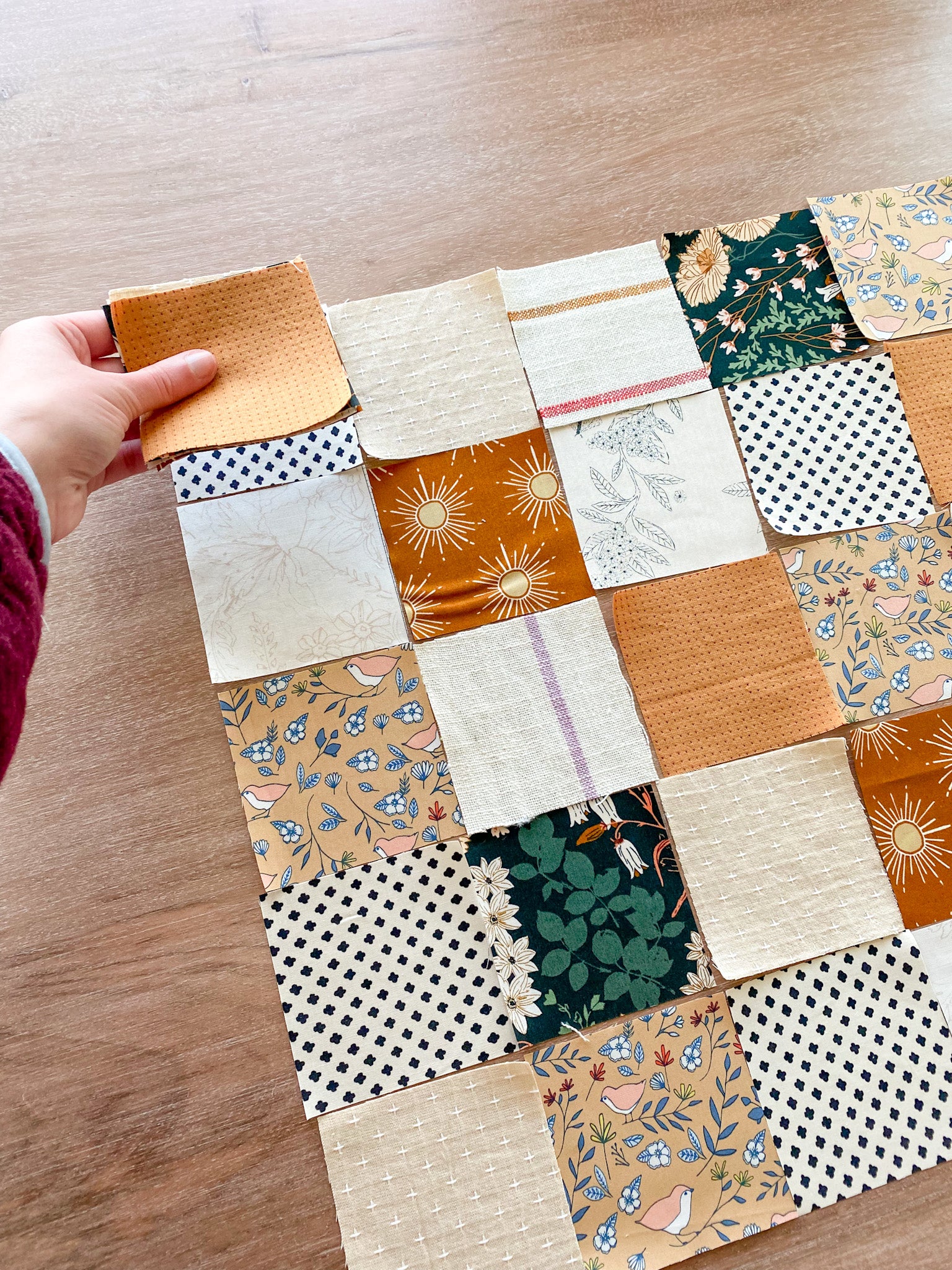
Before we start sewing, we need to organize everything. Lay out each piece of your segment in order, in the same rows and columns as your finished quilt. It’s okay to do just a couple rows…but you can also do a bunch at once (especially if you’re making a smaller quilt).
If you’re making a randomized pattern (like Patchwork Squares), then make sure you have an even mix of your fabrics.
If you’re using a specific pattern (like Vintage Lace), then make sure everything is in its proper position and rotated the correct way.

2. STACK THE PIECES OF YOUR FIRST AND SECOND COLUMNS.
Take the first and second pieces of each row, and place them right sides together. (Go ahead and pin if you need to.) Once you’ve made each set of two, go ahead and stack your sets into an organized pile right by your sewing machine.


3. STACK UP THE REST OF YOUR PIECES.



4. START SEWING YOUR PIECES.
Take your first pile, and sew the first two squares together using a ¼” seam. Then, without snipping your threads, sew the second two squares, followed by the third set of squares, and so on.


5. KEEP SEWING YOUR NEXT PILE.


6. FINISH SEWING AND CUT YOUR THREADS.
Continue to add squares to your rows until they are all complete. Then you can trim the threads connecting your rows!


💡 |
Nesting seams
|
You may also like…
Strip piecing FAQ
DO YOU BACKSTITCH WHEN CHAIN PIECING?
WHAT’S THE BEST METHOD FOR CHAIN PIECING?
WHAT IS THE FASTEST QUILT TO MAKE?
🔄 |
Post updated 4/7/2026
|
.
.